
How to Tell If Your Home Heat Is Gas or Electric
Just moved into a new Silverton or Salem home or planning an HVAC upgrade? Here is a fast 5-step inspection checklist to determine your heating fuel source in minutes.
Quick 30-Second Test Summary
- Small burner window with blue flame
- Metal exhaust flue pipe out the roof/wall
- Gas pipe with shutoff valve leading into unit
- You receive monthly NW Natural bills
- No flame, no pilot light window
- No metal gas flue vent pipe attached
- Thermostat shows "EM Heat" or "Aux Heat"
- Heating costs billed strictly on PGE / Pacific Power
Gas vs. Electric Heating Identification Chart

5 Simple Ways to Identify Your Heating Fuel Source
Inspect the Furnace / Air Handler Cabinet
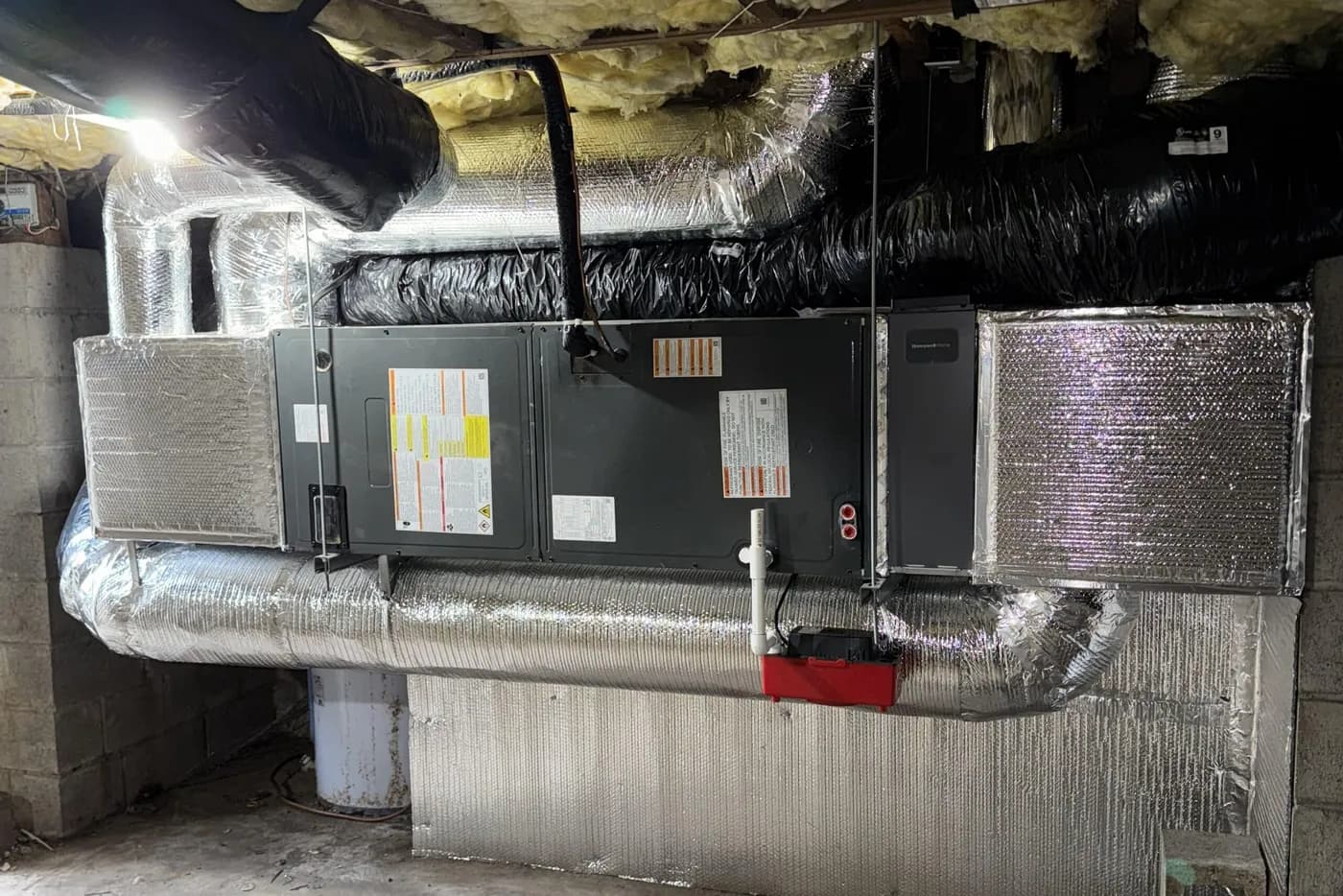
Locate your indoor unit in the basement, utility closet, or garage. Take off the front access panel or look through the glass sight port:
- Gas Furnace: You will see a burner assembly with a small blue flame (or igniter glow) inside when running, along with a black iron or copper gas supply line equipped with a manual lever valve.
- Electric Unit / Heat Pump Handler: There is no flame, no burner chamber, and no gas pipe. Instead, thick electrical conduit wiring connects directly to electrical circuit breakers inside the cabinet.
Check for an Exhaust Flue Pipe
Gas combustion creates carbon monoxide and water vapor byproducts that must be safely vented outdoors:
- Gas Furnace: Features a round metal exhaust pipe (or double-walled white PVC pipe on high-efficiency models) running out through the roof or exterior sidewall.
- Electric Furnace / Heat Pump: Produces zero combustion byproducts, so there is no exhaust vent pipe attached to the unit.
Look at Your Wall Thermostat Display
Your wall thermostat holds quick clues about your heating setup:
- If your thermostat lists "EM Heat" (Emergency Heat) or "Aux Heat", your system is an electric heat pump with auxiliary heating coils.
- Standard gas furnaces usually only display simple Heat / Cool / Off toggles.
Examine Exterior Meters & Outdoor Condenser
Walk around the outside perimeter of your house:
- Gas Meter: A metallic gray gas meter with dials and shutoff valves attached to your exterior foundation wall indicates natural gas service.
- Heat Pump Outdoor Unit: If your outdoor air compressor unit turns on and spins during cold winter days when the heat is running, you have a heat pump! (Standard AC units remain off all winter).
Review Your Oregon Monthly Utility Bills
Check who sends your monthly utility statements:
- If you receive statements from NW Natural (or Cascade Natural Gas), your home has active natural gas heating or water heating.
- If your heating charges increase only on your Portland General Electric (PGE) or Pacific Power bill in winter, your system is electric or heat pump based.
Still Unsure What Heating System You Have?
Contact our licensed technicians for a complimentary inspection in Silverton, Salem, and the Willamette Valley. We can help you evaluate upgrades, heat pump rebates, and seasonal tune-ups.